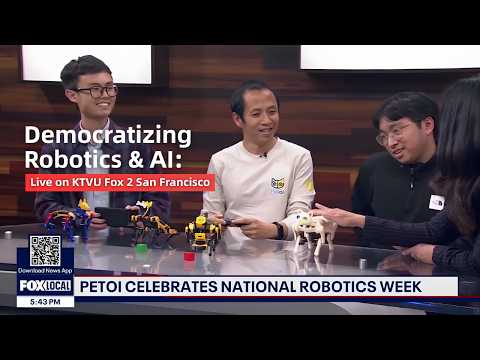

Welcome to Petoi Nybble showcase with robotics projects, where we will highlight how our AI coding robot cat Nybble is being used for various robot projects around the world. In this showcase, we explore how makers and students are turning Nybble into a versatile platform for robotics projects using Bluetooth, PySerial, ultrasonic sensing, and even reinforcement learning.
We’ll highlight community contributions from Gero on Petoi Camp (our community), including a playful “random actions” script and an ultrasonic-based avoidance routine. We will also feature a master’s thesis by Bruno Zahirović demonstrating RL sim-to-real on Nybble. Whether you’re exploring a DIY robot project, building a DIY robot kit, or teaching Python robotics with a coding robot, this roundup shows how a compact, programmable robot cat can scale from simple scripts to advanced AI.
Table of Contents

By combining hands-on assembly with coding exercises, Nybble encourages creativity in robotics. Beginners learn structured programming, while advanced users can implement algorithms for navigation, sensing, or machine learning. This flexibility transforms Nybble into an engaging robotics project—one that grows alongside the learner’s skills.
Project 1: Make Nybble Do Random Stuff
One of the most exciting aspects of owning Nybble is the ability to customize its behavior through coding. In this Petoi Camp community project, Gero demonstrated how Nybble can be programmed to perform a sequence of playful, random actions using Python robotics and simple Bluetooth commands.
By controlling Nybble with Pyserial API via a Bluetooth or USB connection, users can send commands that trigger behaviors like walking, turning, or even playful head tilts. Instead of following a rigid script, Nybble chooses from a set of actions at random—making it feel more like a lively robotic companion rather than just a mechanical device.

This DIY robot project highlights how even simple scripts can create dynamic and entertaining behaviors. For beginners, it’s an approachable way to experiment with coding robots and see immediate results. For advanced users it opens doors to full customize the smart robot cat behaviors!
Project 2: Make Nybble Run Around and Avoid Obstacles
In another Petoi Camp experiment, Gero showcased how Nybble can explore a home environment while avoiding objects in its path. By combining ultrasonic sensors with programmable commands, this robotic companion transforms into a curious explorer—navigating spaces in real time.
The project demonstrates how adding sensors elevates Nybble from a DIY robot kit to a smart AI companion robot capable of interacting with its environment. With obstacle avoidance logic, Nybble can detect objects like walls, chairs, or even playful pets, then make decisions on whether to turn, stop, or reroute.

This robotics project is particularly valuable for learners interested in Python robotics and sensor-based navigation systems. It provides a hands-on introduction to key concepts such as sensor integration, environmental awareness, and algorithm-driven movement, all while keeping the process fun and accessible through a lovable robot cat.
Project 3: Sim-to-Real Reinforcement Learning

Nybble’s versatility isn’t limited to hobby projects only. In this recent LinkedIn post, Bruno Zahirovic highlighted how Nybble is being applied in a graduate student robotics project. He successfully completed his Master's thesis(in Croatian) by training an agent with Reinforcement Learning and achieving Sim to Real transfer with Nybble robot cat.

His work demonstrates the potential of the coding robot cat as a valuable tool for both research and advanced educational projects. The 3D-printed structures of Nybble have enabled him run Nybble gait simulation on NVIDIA Isaac Sim and Isaac Gym first, then deploy the experiments on a real robot cat like Nybble.
Bruno’s showcase illustrates how Nybble can evolve into a fully programmable quadruped platform for advanced experimentation. Its modular design and compatibility with Python robotics make it a reliable testing ground for engineers and educators alike, whether for algorithm development, motion control, or AI-driven behaviors.
Introducing Nybble Q: Your Latest Programmable Robot Cat
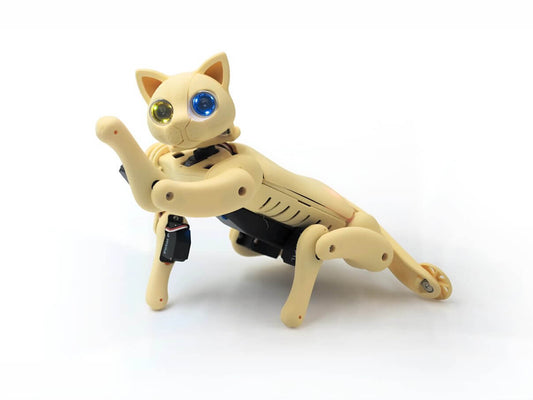
We are excited to announce the arrival of our latest programmable robot cat: Nybble Q. Nybble Q will succeed our previous Nybble model, which has now been discontinued.
Nybble Q is more than a cute robot cat:
- It’s a fully programmable robot designed for STEM learners, makers, and educators.
- Built on an open-source framework, Nybble bridges the gap between playful interaction and serious engineering.
- With its cat-like form factor, Nybble instantly appeals as a robotic companion while offering deep technical exploration through coding and hardware customization.
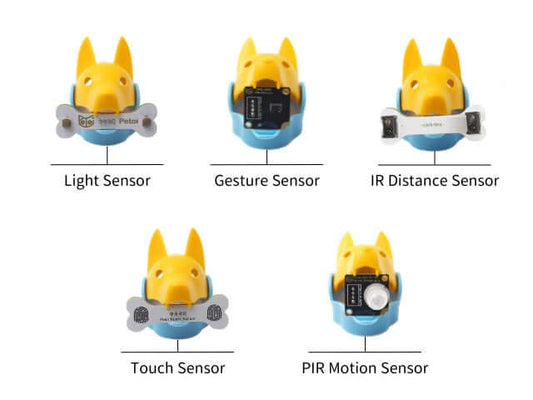
Whether you’re experimenting with Python robotics, tinkering with a DIY robot kit, or exploring AI concepts through reinforcement learning, Nybble provides a solid foundation. Users can expand its functionality using add-ons like ultrasonic sensors, Bluetooth modules, or Raspberry Pi integration, making it a versatile AI companion robot for projects of all levels.
The Bigger Picture: Nybble Robot Cat Family as a Robotics Learning & Research Tool
The projects by Gero and Bruno are just a glimpse into the growing ecosystem of Nybble users around the world. From playful home experiments to advanced research demonstrations, Nybble proves itself as more than a robotic companion. It can be used for research, education, or just by hobbyists for basic projects as well!

As a DIY robot kit, Nybble offers accessibility for beginners while still supporting the depth and complexity needed for professional-grade robotics projects. Its adaptability means students of all ages can use it to learn robot coding, hobbyists can explore Python robotics, and engineers can prototype AI behaviors. All of this can be done with the same programmable robot.

What makes Nybble unique is the strength of its community. Communities like Petoi Camp allow creators to share their ideas, troubleshoot challenges, and inspire new applications. Whether it’s making Nybble avoid obstacles, perform randomized actions, or showcase cutting-edge research, every contribution adds to the collective knowledge and scope of what is possible with Nybble.
By joining Petoi Camp, you become part of a global movement where hobbyists, educators, and researchers share ideas, projects, and breakthroughs. Together, we’re shaping the future of AI companion robots, and we would love to see you there!

Ready to start your own DIY robot project? Get your Nybble Q robot cat today and bring your ideas to life!